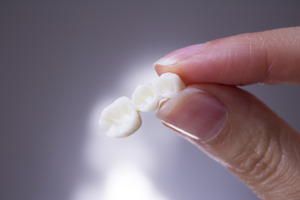
If you have recently received a dental bridge to replace a missing tooth, you can typically expect it to last for many years. However, even a well-made bridge could potentially fail if you’re not careful. In order to ensure that your prosthesis lasts as long as possible, you need to be aware of the many problems that can befall it. Below is a closer look at 3 possible causes of dental bridge failure and what you can do about them.
1. Biting Down on Overly Hard Foods
Dental bridges are designed to be highly durable, allowing them to withstand the forces of biting and chewing that they’re exposed to on a daily basis. With that said, “durable” does not mean “indestructible.” If you use your bridge to bite down on hard candies or other kinds of especially hard foods, it could end up breaking.
To avoid damaging your dental bridge, you should make a point of avoiding overly hard foods as much as possible. It pays to be aware of what you’re eating so that you can make sure that you aren’t exposing your prosthesis to more pressure than necessary.
2. Bruxism
Sometimes stress and anxiety can lead to bruxism, which is a condition that causes you to grind and clench your teeth involuntarily. Over time, unaddressed bruxism can wear your dental bridge down or even fracture it.
Since bruxism often strikes while you’re asleep, it’s a good idea to invest in a professionally made nightguard. Thanks to this simple oral appliance, you can protect your dental bridge from the pressures of grinding and clenching throughout the night.
3. Poor Oral Hygiene
A dental bridge needs healthy teeth to provide it with the support that it needs. But if you don’t keep the area around the prosthesis clean, harmful bacteria could slip underneath it and attack the teeth, leading to cavities. If a cavity goes untreated for too long, it could weaken the tooth to the point where it can’t support the bridge anymore.
Excellent oral hygiene is essential for protecting your dental bridge. Remember to brush at least twice a day while also flossing on a daily basis. If you’re having trouble cleaning the area under the bridge, consider investing in a water flosser.
Remember, it’s still possible for a dental bridge to fail even if you do everything right. If you have any reason to think that something has gone wrong with your prosthesis, your best option is to reach out to your dentist; once they’ve figured out what the problem is, they can devise a solution.
About the Author
Dr. Sheri McIntosh went to the University of Texas Health Science Center at San Antonio for her dental education. She currently belongs to a number of dental organizations, including the North Texas Dental Society and the Texas Dental Association. At Distinguished Dental in Fort Worth, she offers customized dental bridges for patients with a missing tooth or multiple missing teeth. If you think your smile might benefit from a dental bridge, you can schedule a consultation with Dr. McIntosh by visiting her website or calling (817) 337-8300.